1
Faculty Member and Associate Professor, Department of Islamic Economics, Research Center for Islamic Systems Studies, Islamic Culture and Thought Research Institute
2
Professor at Qom Seminary and Researcher in Islamic Economics Fiqh
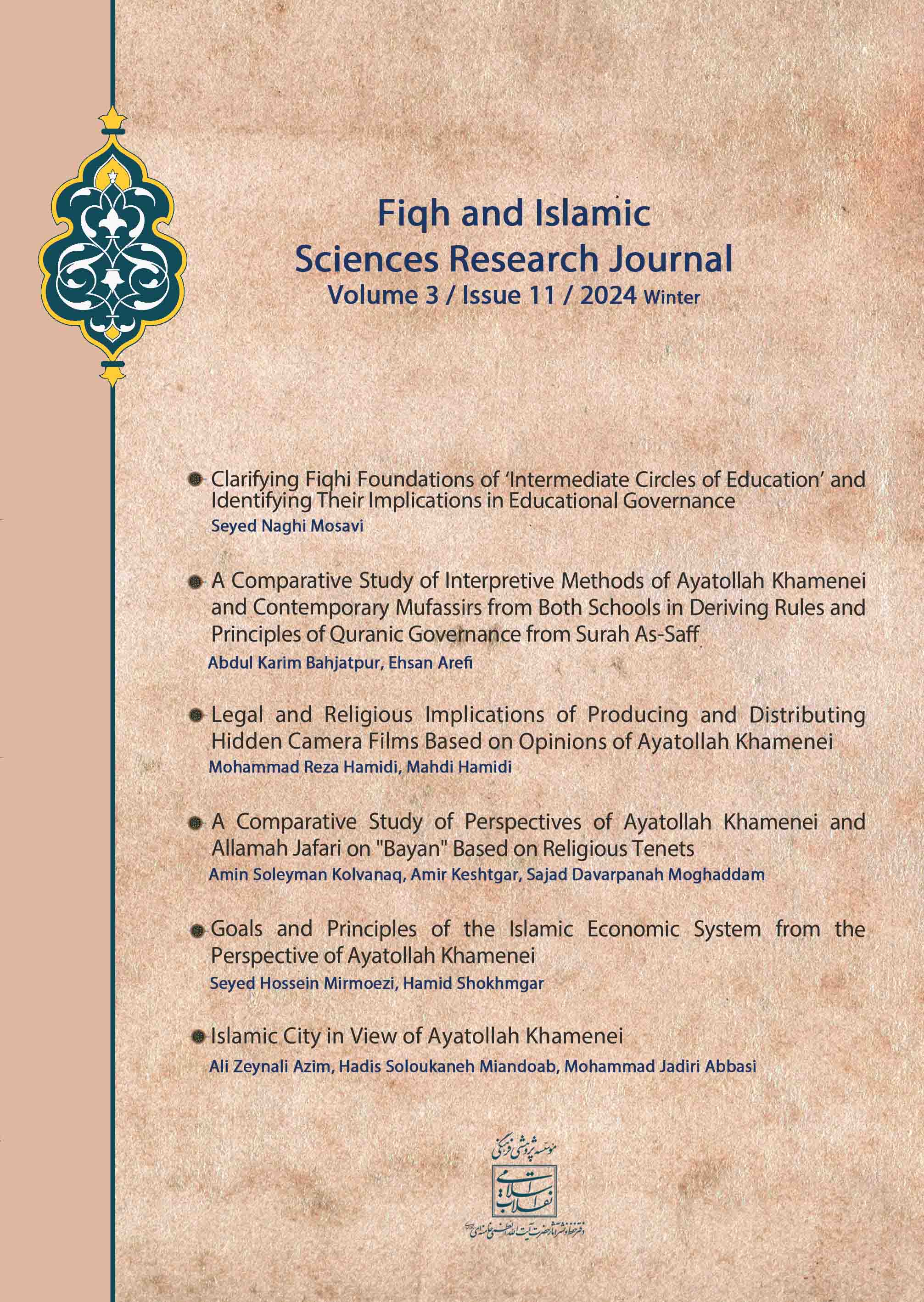
Analyzing Ayatollah Khamenei's economic thought is crucial, given his experience and status as an Islamic thinker. Despite this, his theories have received limited academic attention due to the absence of a systematic, written compilation. This paper employs thematic analysis to elucidate the core goals and principles of the Islamic economic system as articulated by the Leader. Through an analysis of Ayatollah Khamenei’s statements spanning 1973 to 2024, it becomes evident that he conceptualizes the goals of the Islamic economic system as a hierarchical structure. The ultimate goal, as He articulates, is economic justice, supported by intermediate objectives encompassing economic progress, power, growth, welfare, independence, and security. Correspondingly, the system's foundational principles are delineated into two distinct categories: structural and behavioral. Structural principles are characterized by elements such as religious democracy, a government committed to public service, economic freedom, ownership rights, a defined transactional valuation process, and the principle of labor as the basis of income. Behavioral principles are defined by Insāf (justice), positive competition, Itqān (perfection) in work, exercising moderation and avoiding Isrāf (waste due to wanton consumption and production), and Infāq (spending, disbursement). This study seeks to provide a clearer framework for understanding Ayatollah Khamenei’s economic perspectives.
اصغری، محمود (1394). اقتصاد مقاومتی؛ چیستی، چرایی، مبانی، مؤلفهها، اهداف و راهبردها در کلام مقام معظم رهبری. پژوهشهای اجتماعی اسلامی. سال بیست و یکم. شماره اول. 104.
خامنهای، سیدعلی (1401). تفسیر سوره بقره. تهران: انتشارات انقلاب اسلامی
خامنهای، سیدعلی (1402). تفسیر سوره منافقون. تهران: انتشارات انقلاب اسلامی.
خسروپناه، عبدالحسین (1402). منظومه فکری آیتالله خامنهای: نظام بینشی، منشی و کنشی (دو جلدی). سازمان انتشارات پژوهشگاه فرهنگ و اندیشه اسلامی. چاپ دهم.
شیخزاده، محمد؛ عابدیجعفری، حسن؛ تسلیمی، محمدسعید و فقیهی، ابوالحسن (1390). تحلیل مضمون و شبکه مضامین: روش ساده و کارامد برای تبیین الگوهای موجود در دادههای کیفی. اندیشه مدیریت راهبردی. شماره 10: 151-198.
صادقینیارکی، مهدی (1398). ارکان جهتساز بخش خصوصی از منظر مقام معظم رهبری امام خامنهای (دکترین، اهداف و سیاستها). فصلنامه علمی مطالعات بینرشتهای دانش راهبردی. سال نهم. شماره 37.
غفاری، مجتبی (1398). کارکردهای مبانی هستیشناسی تعیین اهداف پیشرفت اقتصادی از منظر رهبر معظم انقلاب اسلامی. فصلنامه اقتصاد اسلامی. سال نوزدهم. شماره 76.
مخبر دزفولی، محمدرضا (1393). اندیشههای اقتصادی مقام معظم رهبری. انتشارات مجمع تشخیص مصلحت نظام.
مرتضی رخیده دخت و همکاران (1401). تحلیل اهداف اقتصادی در اندیشه مقام معظم رهبری با تأکید بر مفاهیم قرآنی. فصلنامه قرآن و طب. دوره 7. شماره 5.
مکارمشیرازی، ناصر (1385). دائرةالمعارف فقه مقارن. قم: مدرسه الامام علی بن ابیطالب علیهالسلام.
موسویان، سیدعباس و غفورزاده، حسین (1402). اکتشاف و طراحی نظام اقتصادی اسلام با تأکید ویژه بر دیدگاه مقام معظم رهبری در نظامسازی اسلامی. آئین حکمرانی. سال اول. شماره دوم.
الموسوی الخمینی، سید روح الله (1421ق). کتابالبیع، ج 1. ص 25.
هاشمیشاهرودی، محمود (1382). فرهنگ فقه مطابق مذهب اهل بیت علیهمالسلام. قم: مؤسسه دائرةالمعارف فقه اسلامی.
Given,L.M.(Ed.) (2008).The Sage Encyclopedia of Qualopedia Research Methods. Vols.1&2. California:
Braun, V., & Clarke, V. (2006). Using thematic analysis in psychology. Qualitative research in psychology, 3(2), 77-101
Mirmoezi,S H and Shokhmgar,H . (2024). Goals and Principles of the Islamic Economic System from the Perspective of Ayatollah Khamenei. Research Journal on Fiqh and Islamic Sciences, 3(11), 77-106. doi: 10.22034/rjfis.2025.492271.1117
MLA
Mirmoezi,S H , and Shokhmgar,H . "Goals and Principles of the Islamic Economic System from the Perspective of Ayatollah Khamenei", Research Journal on Fiqh and Islamic Sciences, 3, 11, 2024, 77-106. doi: 10.22034/rjfis.2025.492271.1117
HARVARD
Mirmoezi S H, Shokhmgar H. (2024). 'Goals and Principles of the Islamic Economic System from the Perspective of Ayatollah Khamenei', Research Journal on Fiqh and Islamic Sciences, 3(11), pp. 77-106. doi: 10.22034/rjfis.2025.492271.1117
CHICAGO
S H Mirmoezi and H Shokhmgar, "Goals and Principles of the Islamic Economic System from the Perspective of Ayatollah Khamenei," Research Journal on Fiqh and Islamic Sciences, 3 11 (2024): 77-106, doi: 10.22034/rjfis.2025.492271.1117
VANCOUVER
Mirmoezi S H, Shokhmgar H. Goals and Principles of the Islamic Economic System from the Perspective of Ayatollah Khamenei. Research Journal on Fiqh and Islamic Sciences. 2024;3(11):77-106 (In Persian). doi: 10.22034/rjfis.2025.492271.1117